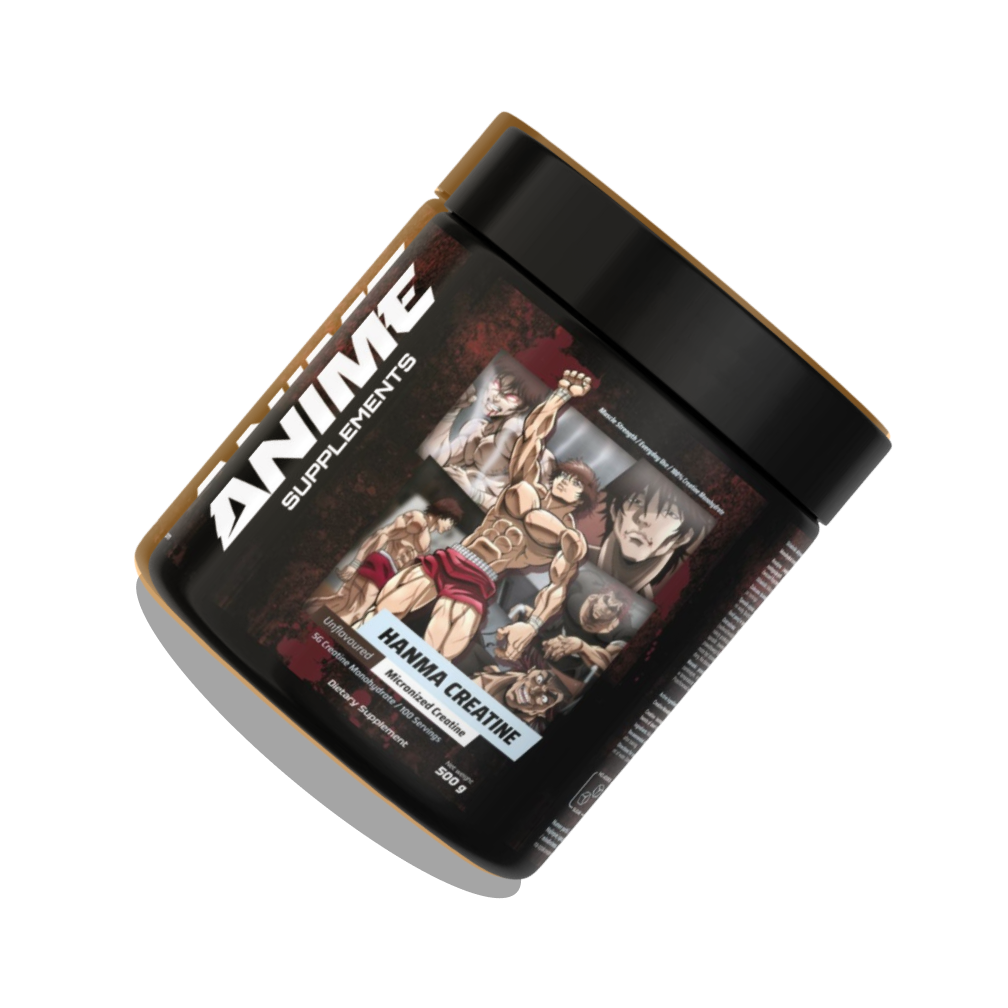
Creatine Monohydrate
Creatine is the most researched supplement in all of sports nutrition. It's been studied for over thirty years, across thousands of people, and the science is about as settled as science gets. And yet, walk into any gym and you'll still hear the same warnings passed around like they're gospel. It'll wreck your kidneys. It'll make your hair fall out. It's basically a steroid. It's just water.
None of that holds up. But these myths are stubborn, and they stop a lot of people from using something that would genuinely help their training. So let's go through them one by one, look at what the actual research says, and put the tired old gym-lore to bed.
First, what creatine actually is
Before we bust the myths, it helps to know what you're even taking. Creatine isn't some exotic lab chemical. It's a compound your body already makes, and you already eat it every time you have red meat or fish. Around 95% of it is stored in your muscles.
Its job is energy. During short, explosive efforts — a heavy set, a sprint, an all-out push — your muscles burn through their immediate fuel supply fast. Creatine helps regenerate that fuel quicker, so you can push a little harder for a little longer. Over weeks and months, those extra reps add up to real gains in strength and size. That's the whole mechanism. No magic, no shortcuts. Just more available energy when your muscles need it most.
Now, the myths.
Myth 1: "Creatine damages your kidneys"
This is the big one, and it's the one that scares the most people off. It sounds serious, and it has a kernel of something real behind it — which is exactly why it's survived so long.
Here's where it comes from. When your body uses creatine, it produces a waste product called creatinine. Doctors measure creatinine in the blood as a rough marker of how well your kidneys are working. When you supplement with creatine, your creatinine levels rise slightly — not because anything is being damaged, but simply because there's more creatine in your system being processed. The number on the lab report goes up, someone panics, and a myth is born.
But a modest rise in creatinine from supplementation is not the same thing as kidney damage. It's a measurement quirk, not an injury. And the research on this is overwhelming. More than twenty years of studies, including trials running as long as five years, have found no kidney damage in healthy people taking creatine at normal doses. The International Society of Sports Nutrition — the people whose entire job is scrutinising this stuff — has stated plainly that creatine does not cause kidney harm in healthy individuals.
The one honest caveat: if you already have diagnosed kidney disease, the picture is less studied, and you should talk to your doctor before supplementing anything. That's just sensible. But for the healthy person training in the gym? Your kidneys are fine.
Myth 2: "Creatine makes you go bald"
This one has probably cost creatine more customers than any other, because for a lot of men, the fear of losing their hair outweighs the appeal of a better bench press.
The entire myth traces back to a single study. In 2009, a small trial on twenty college rugby players found that after a creatine loading phase, their levels of DHT — a hormone linked to male-pattern baldness in genetically prone men — rose by around 56%. That's it. That one study, on twenty people, measuring a hormone, not actual hair. It never measured whether anyone's hair actually thinned. But "creatine raises the baldness hormone" made for a catchy headline, and it spread like wildfire.
Here's the problem: in the fifteen years since, nobody has been able to reliably replicate that finding. Study after study looking for the same DHT spike has come up empty. A comprehensive 2021 scientific review of creatine misconceptions found no consistent link between supplementation and increased DHT or hair loss.
And then, in 2025, the myth got its most decisive answer yet. Researchers ran the study that should have been done from the start: a randomised, double-blind, placebo-controlled trial that directly measured hair follicle health. Resistance-trained men took 5 grams of creatine daily for twelve weeks while researchers tracked their hormone levels, hair density, follicle counts, and hair thickness. The result? No significant difference in DHT, no difference in the testosterone-to-DHT ratio, and no difference in any hair-growth measure between the creatine group and the placebo group. The study concluded there was strong evidence against the idea that creatine causes hair loss.
The reason a lot of guys think creatine thinned their hair is simpler and sadder: a huge portion of creatine users are young men, and young men are exactly the group who start naturally losing their hair anyway. They took creatine, their hairline moved, and they blamed the powder. Correlation, not causation. If you're genetically destined for male-pattern baldness, it was coming with or without the scoop.
Myth 3: "Creatine is a steroid"
This one usually comes from people who don't lift, hearing that you take "supplements to get bigger" and lumping it all into the same scary category.
Creatine is not a steroid. It's not even in the same universe as one. Anabolic steroids are synthetic hormones that hijack your body's hormonal system. Creatine is an amino-acid compound your body produces on its own and that you eat in ordinary food like steak and salmon. It doesn't alter your hormones. It doesn't carry the health risks of steroids. And it's completely legal and permitted in every level of drug-tested sport.
The confusion is understandable — both are associated with getting stronger — but the comparison is nonsense. One is a naturally occurring energy compound. The other is a controlled substance. Calling creatine a steroid is like calling coffee a hard drug because both give you energy.
Myth 4: "Creatine is just water weight"
There's a sliver of truth buried in this one, which is why it's worth addressing properly rather than just dismissing.
When you start creatine, you may notice the scale jump a pound or two in the first week or so. That is water — but not the bad kind people imagine. Creatine pulls water into your muscle cells, not under your skin. That's a good thing. Well-hydrated muscle cells are primed to perform and may even signal for growth. This isn't the bloated, puffy water retention people fear; it's your muscles filling out.
But here's the part the myth ignores: the water is just the beginning. The reason creatine has thirty years of research behind it is that it produces real, measurable gains in strength and lean muscle over time — gains that have nothing to do with water. Dismissing creatine as "just water weight" is like judging a whole meal by the appetiser. The initial bump is water. What comes after, over weeks of training, is actual muscle.
Myth 5: "You have to load creatine or it won't work"
This one won't hurt you, but it might cost you money and give you an unnecessary stomach ache.
You've probably heard that you need to "load" — take 20 grams a day for the first week to saturate your muscles — before dropping to a maintenance dose. Loading does work, and it does fill your muscle stores faster, within about a week. But it's completely optional.
If you simply take 3 to 5 grams a day, every day, you'll reach the exact same level of muscle saturation. It just takes around three to four weeks instead of one. The end result is identical. Loading only matters if you're in a rush to feel the effects — before a competition, say. For everyone else, a steady daily dose is simpler, cheaper, gentler on your stomach, and just as effective. Skip the loading phase if you want to. Your muscles won't know the difference a month from now.
The bottom line
Creatine is one of the safest, most effective, and most thoroughly studied supplements you can take. The myths around it aren't backed by evidence — they're backed by a single unreplicated study here, a misread lab value there, and a lot of gym-floor hearsay that got repeated until it sounded true.
What the research actually shows is refreshingly boring: take 3 to 5 grams of creatine monohydrate a day, every day, and over time you'll train harder and build more strength and muscle than you would without it. No kidney damage. No baldness. No steroids. No catch.
Get it consistently, stay hydrated, keep training, and let three decades of science do the rest.
Ready to fuel the work? Our Hanma Creatine Monohydrate delivers a clean, properly dosed 5 grams per serving — no fillers, no proprietary blends, no nonsense. Officially licensed, built for people who actually train.
This article is for informational purposes only and is not medical advice. If you have a pre-existing health condition, consult a qualified healthcare professional before starting any supplement.